Same Quality in Every Lot
CorporateAbout UsAdvanced Polymer & R&D LaboratoryChairman's MessageOur LaboratorySame Quality in Every LotWho We AreCustomer Satisfaction PolicyEnvironmental PolicyInformation Security PolicyOccupational Health & SafetyQuality PolicySocial Responsibility PolicyStability PolicySustainability PolicyNewsCareers
MasterbatchesBio Polymer MasterbatchBlack MasterbatchColor MasterbatchNanotechnology MasterbatchTransparent MasterbatchWhite Masterbatch
PigmentsTitanium Dioxide (TiO2)Yellow PigmentOrange PigmentBrown PigmentRed PigmentViolet PigmentBlue PigmentGreen PigmentCarbon Black PigmentRAL Catalogue
AdditivesAdvanced Additive TechnologiesAntiblock MasterbatchAntimicrobial MasterbatchAntioxidant MasterbatchAntistatic MasterbatchConductive MasterbatchDesiccant & Antigas MasterbatchOdor Eliminating MasterbatchSlip MasterbatchUV & Light Stabilizer
IndustriesAgriculture IndustryAutomotive IndustryCable IndustryDefense & AerospaceHome Appliances IndustryPackaging IndustryRaffia, Lamination & Artificial GrassTextile Industry
Technical LibraryLightfastness in PigmentsMasterbatch SelectionMigration Fastness in PigmentsPlastic Structure & MorphologyProduction ConsiderationsTechnical TablesWhat is Masterbatch?What is Pigment?
ComplianceCookie PolicyEthical Sourcing DeclarationFood Contact DeclarationPersonal Data Protection NoticeREACH DeclarationRoHS DeclarationSVHC Declaration
Contact Get a Quote
Home / Industries

Home Appliances Industry

home appliances injection molding

Aesthetics, Durability, and Perfect Color Match

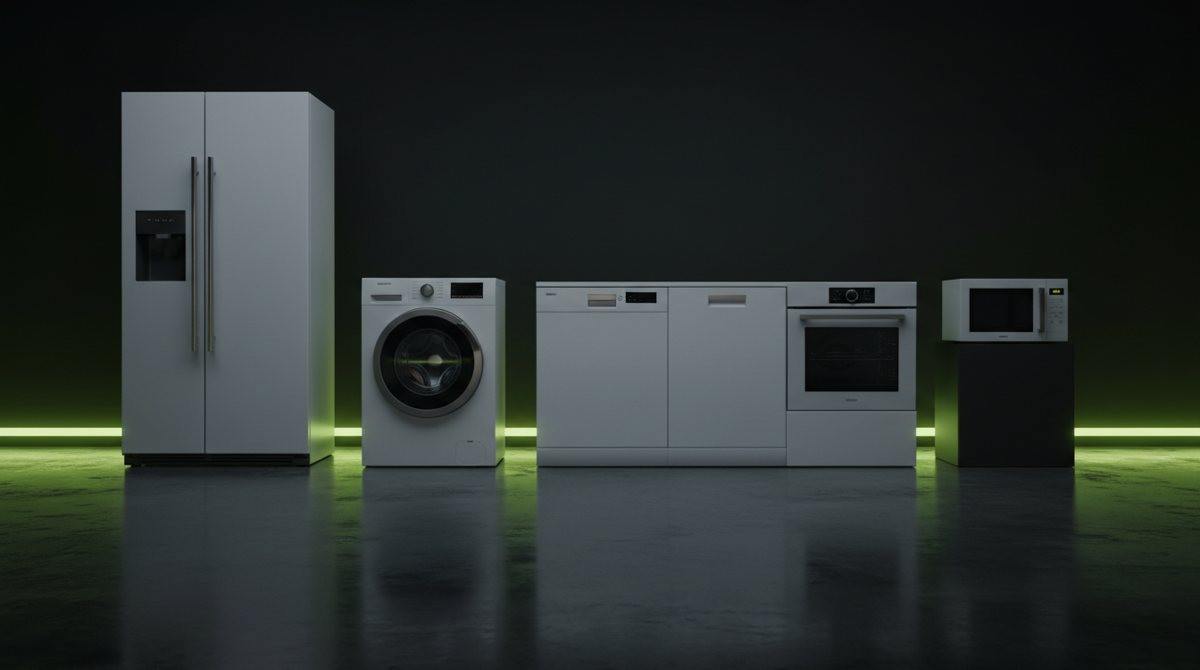
In the white goods and electrical household appliances sector, which is one of the largest production powers in Turkey and Europe, the exterior appearance and long-lasting use of products form the basis of brand prestige. As Erk-Han, we develop masterbatch and specific additive solutions at the highest quality standards for the plastic components of refrigerators, washing machines, dishwashers, air conditioners, and small household appliances.

In white goods production, it is extremely critical to ensure perfect color integrity (color match) when parts coming from different machines and molds meet on the assembly line. We guarantee this flawless color harmony with our high-precision measurement laboratories and zero-error tolerance between lots. Furthermore, we create a superior protection wall against heat, light, and cleaning chemicals that household appliances are exposed to in daily use.

Thanks to the special UV stabilizers and antioxidant additives we have developed, we eliminate the yellowing problem that occurs on plastic surfaces over time; we delay dusting with our antistatic additives and ensure that products maintain their first-day brightness for years.

Recommended Dosage

  • In standard body and internal components: 1.0% - 2.0%
  • In small appliances requiring high gloss and aesthetic surfaces: 1.5% - 3.0%
  • In special applications for anti-yellowing (UV) and dust-repellency (Antistatic): 2.0% - 4.0%

Frequently Asked Questions and Solutions

A technical guide of 50 questions compiled from the field experience of the Erk-Han engineering team.

Why does the color yellow on white goods parts (refrigerator interior)?
Thermo-oxidative degradation and heat; long-lasting whiteness is maintained with anti-oxidant additive, heat-stable masterbatch.
How is heat resistance achieved in plastics around the washing machine drum?
With masterbatch containing high heat-resistant pigment and heat stabilizer; color shift is prevented at operating temperatures of 90°C+.
Are food-contact internal components in white goods safe?
EU 10/2011 and FDA compliant, heavy-metal-free masterbatch must be used; migration risk is eliminated in food-contact parts inside the refrigerator.
How is surface gloss maintained on a white goods panel (ABS/HIPS)?
With well-dispersed, heat-stable masterbatch; a homogeneous glossy surface is achieved by preventing flow marks and matting.
How is an antimicrobial white goods surface produced?
With silver-ion-based antimicrobial masterbatch; ISO 22196 compliant, providing lasting hygiene on refrigerator and kitchen surfaces.
How is the whiteness index increased in white goods?
With high-TiO2-content white masterbatch and optical brightener; a bright, clean white perception is achieved.
Color tone varies from mold to mold in injection parts?
With heat-stable, high-dispersion masterbatch and a stable process; consistency is ensured by reducing the ΔE tolerance.
How is the odor problem (rPCR) eliminated in white goods plastics?
With odor-removing masterbatch; odorless internal components are produced by neutralizing VOCs coming from recycling.
How is a high-gloss black panel (piano black) achieved?
With high-structure, well-dispersed carbon black masterbatch; deep blackness (jetness) and a smooth glossy surface are achieved.
Why do UV-exposed external white goods parts fade?
It is a lack of UV stabilizer; with HALS additive masterbatch, color fading is delayed on outdoor parts.

Let's find the right solution for your project

Contact our team for sample requests, color matching or technical consultancy.